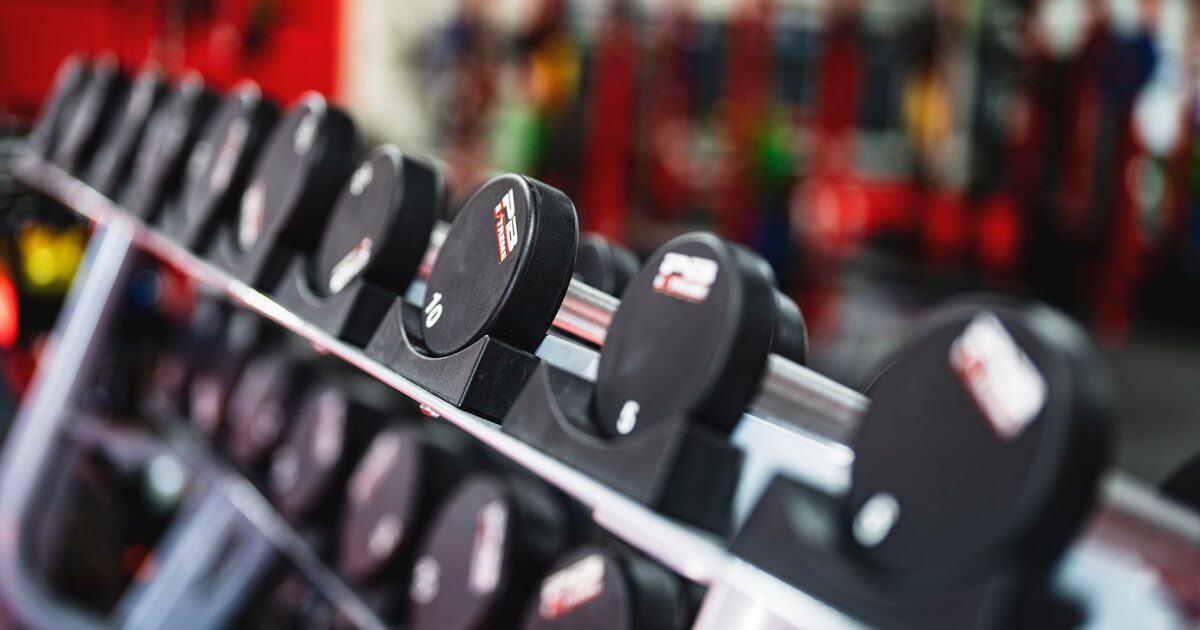
A single pair of adjustable dumbbells covers more training ground than most people think. You can squat, hinge, press, pull, and carry with them, which means one set of weights and about 40 minutes is enough to train your whole body hard. This is the exact session I give clients who train at home, built around five movement patterns so nothing important gets skipped.
Why dumbbells are enough for a full-body session
Strength comes from progressive tension on muscle, not from a specific machine. Dumbbells deliver that tension while forcing each side of your body to work independently, so a stronger right arm can't quietly carry a weaker left one. They also let your joints find their natural path instead of locking you into a fixed bar groove, which tends to be friendlier on cranky shoulders and wrists.
The one honest limitation: once you can press or row a given weight for 15-plus clean reps, a fixed dumbbell stops challenging you. That's why a single pair of adjustable dumbbells that reaches at least 20-25 kg (45-55 lb) per hand is the best home purchase you can make. If you only own light weights, you'll lean harder on rep count and tempo to keep the work hard, and I'll show you how below.
The five patterns every full-body day needs
Skip the muscle-by-muscle thinking. Train these five patterns in one session and every major muscle gets hit:
- Squat (knee-dominant) — quads, glutes
- Hinge (hip-dominant) — hamstrings, glutes, lower back
- Push (press) — chest, shoulders, triceps
- Pull (row) — back, biceps, rear delts
- Carry / core — grip, trunk, postural muscles
Pick one exercise per pattern, do them in the order below, and you have a balanced workout. Browse the full exercise library if you want swaps for any movement.
The workout
Warm up first: 3-4 minutes of easy movement (marching, arm circles, bodyweight squats), then one light set of the first two lifts at roughly half your working weight. Then run the session as two supersets plus a finisher to keep your heart rate up and shorten the workout.
| Exercise | Sets x Reps | Rest |
|---|---|---|
| A1. Goblet squat | 3 x 8-12 | — |
| A2. One-arm dumbbell row (each side) | 3 x 8-12 | 60-75 s |
| B1. Romanian deadlift (RDL) | 3 x 8-10 | — |
| B2. Standing overhead press | 3 x 8-10 | 60-75 s |
| C1. Dumbbell floor press | 2 x 10-12 | — |
| C2. Suitcase carry (each side) | 2 x 20 m | 45-60 s |
| Finisher: dumbbell goblet curl-to-press | 2 x 12-15 | done |
"A1/A2" means alternate between the two: a set of squats, rest a few breaths, a set of rows, then rest the full 60-75 seconds before going back. Supersetting opposite patterns lets one muscle group recover while the other works, so you finish in 35-45 minutes without losing quality.
Form cues for the lifts that matter most
- Goblet squat: hold one dumbbell vertically against your chest, elbows tucked. Sit between your hips, knees tracking over your toes, and descend until your elbows brush the inside of your knees. Drive through your whole foot, not just the heels.
- Romanian deadlift: this is the most-rushed lift in the session. Keep a soft knee bend and push your hips straight back, letting the dumbbells slide down your thighs. Stop when you feel a strong stretch in your hamstrings, usually just below the knee. Your back stays flat the entire time, never rounding to chase extra range.
- One-arm row: brace your free hand on a bench or sturdy chair, flat back, and pull the dumbbell toward your hip (not your armpit), squeezing the shoulder blade. Lower under control for a full two-count.
- Overhead press: squeeze your glutes and brace your abs so your lower back doesn't arch. Press the dumbbells up and slightly together, finishing with biceps near your ears.
- Suitcase carry: one dumbbell in one hand, walk tall, and resist leaning toward the weight. This trains your core harder than most ab exercises and exposes left-right imbalances fast.
How heavy, and how to know it's working
Choose a weight where the last 1-2 reps of each set are genuinely hard but your form holds. A useful target is stopping with about 1-3 reps left in the tank (trainers call this "reps in reserve"). If you finish a set and could have done 6 more, the weight is too light.
Progress using double progression: stay at the same weight until you hit the top of the rep range for every set (say, all 3 sets of 12 on goblet squats), then add weight next session and drop back to the bottom of the range. With limited dumbbells, slow the lowering phase to a 3-second count and add a 1-second pause at the hardest point — that raises difficulty without adding load.
Fitting it into a week
Full-body training shines when you run it 3 times a week on non-consecutive days. Monday, Wednesday, Friday is the classic template: each pattern gets three quality exposures weekly, which research consistently links to faster strength and muscle gains than hitting a muscle just once. Keep the days in between for walking, easy cardio, mobility, or sport, and take at least one full rest day.
To stop the sessions feeling repetitive, rotate the exercise within each pattern from one day to the next while keeping the pattern itself. Monday can run exactly as written above; Wednesday, swap a reverse lunge in for the goblet squat and a single-leg RDL for the hinge; Friday, use a step-up and an incline floor press. Same five patterns, slightly different angles, fresh stimulus. If three days feels like a lot at first, start with two and add the third after a couple of weeks.
Recovery and the part people skip
Muscle is built between sessions, not during them. Aim for roughly 1.6-2.2 g of protein per kilogram of bodyweight per day (about 0.7-1 g per pound), spread across your meals, and get 7-9 hours of sleep. For a 75 kg person that's around 120-165 g of protein daily — easier than it sounds when you anchor each meal around a protein source. If you want practical ideas, our recipe collection is built around hitting those numbers.
Expect mild soreness in the first week or two, especially from the RDLs and carries. That fades as your body adapts. Sharp joint pain is different — back off, check your form, and reduce the load if it persists.
Where to go next
This session is deliberately minimal so you can run it for months and keep progressing simply by adding weight and reps. The only record-keeping you need is last session's weights and reps for each lift, jotted in a notebook or your phone, so you know what to beat. If you train fully equipment-free some days, pair it with bodyweight training for muscle, and if you pick up a single kettlebell, the beginner kettlebell workout slots in as a fourth option.
Key takeaways
- One pair of adjustable dumbbells reaching 20-25 kg per hand covers a full-body session
- Train five patterns each day: squat, hinge, push, pull, and a carry or core move
- Run it as supersets to finish a balanced workout in 35-45 minutes
- Use double progression: hit the top of the rep range, then add weight
- Train 3 non-consecutive days a week and eat 1.6-2.2 g protein per kg bodyweight
Frequently asked questions
Can you really build muscle with just dumbbells?
Yes. Muscle grows from progressive tension and effort, not from a specific machine. As long as you take sets close to failure and gradually add weight or reps, dumbbells build strength and size effectively. The main limit is that very strong lifters may outgrow lighter fixed weights.
How heavy should my dumbbells be?
Aim for a pair that reaches at least 20-25 kg (45-55 lb) per hand, ideally adjustable. Lower-body lifts like squats and RDLs need more load than presses, so a range matters. If your weights are light, slow the lowering phase and add pauses to keep sets challenging.
How often should I do this full-body workout?
Three non-consecutive days a week works best, such as Monday, Wednesday, and Friday. That gives each movement pattern three quality exposures weekly, which drives faster progress than training a muscle once. Beginners can start with two days and build up.