For about three decades, fat was the dietary villain, and the low-fat snack aisle was the proof. That was a mistake. Fat is not one thing; it is a family of molecules that behave very differently in your body, and lumping them together is how people end up afraid of olive oil and walnuts while a tub of "0 g trans fat" frosting sits in the trolley. This guide sorts fats into three honest buckets: the ones to build meals around, the ones to keep on a leash, and the one genuinely worth avoiding.
First, why fat earns a place on your plate
Fat is your most energy-dense macronutrient at 9 calories per gram, more than double the 4 in protein or carbohydrate. It also does jobs nothing else can: it carries the fat-soluble vitamins A, D, E and K, supplies the omega-3 and omega-6 fatty acids your body cannot make itself, and forms the membrane around every cell you own. Most health bodies put total fat at roughly 20 to 35 percent of daily calories. On a 2,000-calorie day that is about 44 to 78 grams. The number matters less than the type, which is where most people go wrong.
The everyday fats: eat these freely
Unsaturated fats, both mono and poly, are the backbone of nearly every diet linked to long life and low heart-disease rates. You do not need to ration them, only to fit them into your overall calories.
Monounsaturated fats
- Extra-virgin olive oil — about 14 g fat per tablespoon, mostly oleic acid. Its smoke point sits near 190°C, fine for sauteing and roasting despite the persistent myth that it can only be used cold.
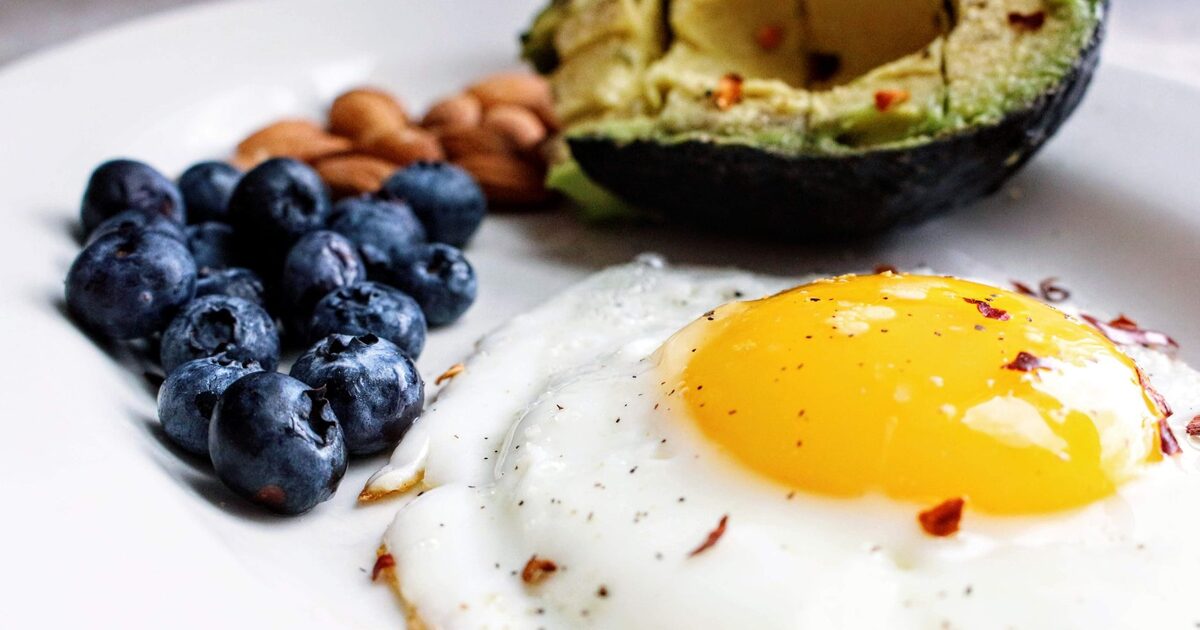
- Avocado — half a medium fruit gives roughly 15 g fat plus 5 g fibre. Avocado oil pushes past 250°C, making it one of the better high-heat choices.
- Nuts — almonds, cashews, macadamias, pecans. A 28 g handful runs 14 to 21 g fat. Keep portions to a small handful; the calories add up fast.
Polyunsaturated fats, and the omega-3 question
This is where specificity pays off. There are two practical families. EPA and DHA are the long-chain omega-3s your heart and brain actually use, and they come almost entirely from oily fish: salmon, sardines, mackerel, herring, anchovies. ALA is the plant version in flaxseed, chia and walnuts; your body converts only a small fraction of it into EPA and DHA, so it is useful but not a full substitute.
The American Heart Association's long-standing advice is two servings of oily fish a week, roughly 250 to 500 mg of combined EPA and DHA per day. A 100 g fillet of farmed salmon alone clears that. If you eat no fish, an algae-based supplement delivers EPA and DHA directly. You will also read a lot about the omega-6 to omega-3 ratio; the honest position is that it is debated, and the stronger move is simply eating more omega-3, not fearing every seed oil.
The "keep it modest" fat: saturated
Saturated fat is where the 1990s got it loudest and least right. It is not poison, and you do not need to hunt it out of your diet. Butter, cheese, red meat, coconut oil and dark chocolate all contain it, and they can sit comfortably in a good diet. The reasonable guidance, from the AHA and WHO alike, is to keep saturated fat to about 10 percent of calories or below, which is roughly 22 grams on a 2,000-calorie day.
The practical reason is straightforward: when you cut saturated fat, what you replace it with decides the outcome. Swap it for unsaturated fat and heart-disease risk drops. Swap it for refined carbohydrate and sugar and you gain nothing. So this is not a "never" food group; it is a "don't build every meal on it" one. Grass-fed butter on your eggs is fine. Butter, cheese, bacon and a cream sauce in the same sitting is the pattern to watch.
| Fat type | Found in | Verdict | Rough target |
|---|---|---|---|
| Monounsaturated | Olive oil, avocado, most nuts | Eat freely | The bulk of your fat intake |
| Polyunsaturated (omega-3) | Oily fish, flax, chia, walnuts | Eat more | 2 fish servings/week |
| Saturated | Butter, cheese, red meat, coconut | Keep modest | ≤10% of calories (~22 g) |
| Industrial trans | Old fried foods, some baked goods | Avoid | As close to 0 as possible |
The one to avoid: industrial trans fat
If there is a true dietary villain, this is it. Artificial trans fat comes from partially hydrogenated oils (PHOs), liquid oils chemically stiffened to behave like solid fat. It is the only fat that both raises your LDL ("bad") cholesterol and lowers your HDL ("good") cholesterol, a double hit with no redeeming benefit.
The good news: regulators agreed. In 2015 the US FDA ruled that PHOs are no longer "generally recognised as safe," with a compliance deadline of June 2018, and the WHO's global REPLACE program has pushed more than 50 countries to enact best-practice limits covering billions of people. Trans fat is now rare in the food supply, but not gone.
Here is the detail that protects you. A label can legally read "0 g trans fat" when a serving contains up to 0.49 g. Eat several servings and the half-grams add up. Two habits close the gap:
- Scan the ingredient list, not just the panel. If you see "partially hydrogenated" anything, it contains trans fat regardless of the "0 g" claim.
- Be wary of older or imported processed items, deep-fried fast food and cheap baked goods, where PHOs historically hid. Note that naturally occurring trans fat in dairy and beef is a different, far smaller story and not a concern.
Putting it on a plate
You do not need to count fat grams to eat well. A simple framework does most of the work:
- Make olive oil or avocado oil your default cooking fat.
- Eat oily fish twice a week, or supplement EPA and DHA if you do not.
- Treat a small handful of nuts as your standard snack.
- Enjoy butter, cheese and red meat, but do not let them anchor every meal.
- Read ingredient lists and skip anything with partially hydrogenated oil.
Fat intake also works alongside the rest of your nutrition, not in isolation. If you are tracking intake, our beginner's guide to counting calories shows where fat's 9-calorie density fits, and if you are wondering when to eat it, whether meal timing actually matters is worth a read.
Key takeaways
- Fat packs 9 calories per gram; aim for roughly 20-35% of daily calories and focus on the type, not just the amount.
- Make unsaturated fats the base: olive oil, avocado and nuts, plus oily fish twice a week for EPA and DHA.
- Keep saturated fat near or below 10% of calories (about 22 g on 2,000), and replace it with unsaturated fat, not refined carbs.
- Industrial trans fat from partially hydrogenated oils is the only fat worth truly avoiding; it raises LDL and lowers HDL.
- A label can say '0 g trans fat' with up to 0.49 g per serving, so read the ingredient list for 'partially hydrogenated'.
Frequently asked questions
Is saturated fat actually bad for you?
It is not a poison to eliminate, but most guidelines suggest keeping it near or below 10% of daily calories. What you replace it with matters most: swapping saturated fat for unsaturated fat lowers heart-disease risk, while swapping it for refined carbs and sugar does not. Butter, cheese and red meat can fit a good diet in sensible amounts.
Is coconut oil a healthy fat?
Coconut oil is about 90% saturated fat, far more than butter, so it counts toward your saturated-fat budget rather than your free unsaturated fats. It is fine in modest amounts and useful for high-heat cooking, but the claim that it is a health food is overstated. Olive and avocado oil remain better everyday defaults.
Do I need fish oil supplements?
If you eat two servings of oily fish a week, such as salmon, sardines or mackerel, you likely get enough EPA and DHA without a supplement. If you rarely eat fish, an algae-based or fish-oil supplement providing 250-500 mg of combined EPA and DHA per day is a reasonable option. Plant omega-3 (ALA) from flax and walnuts helps but converts poorly to EPA and DHA.