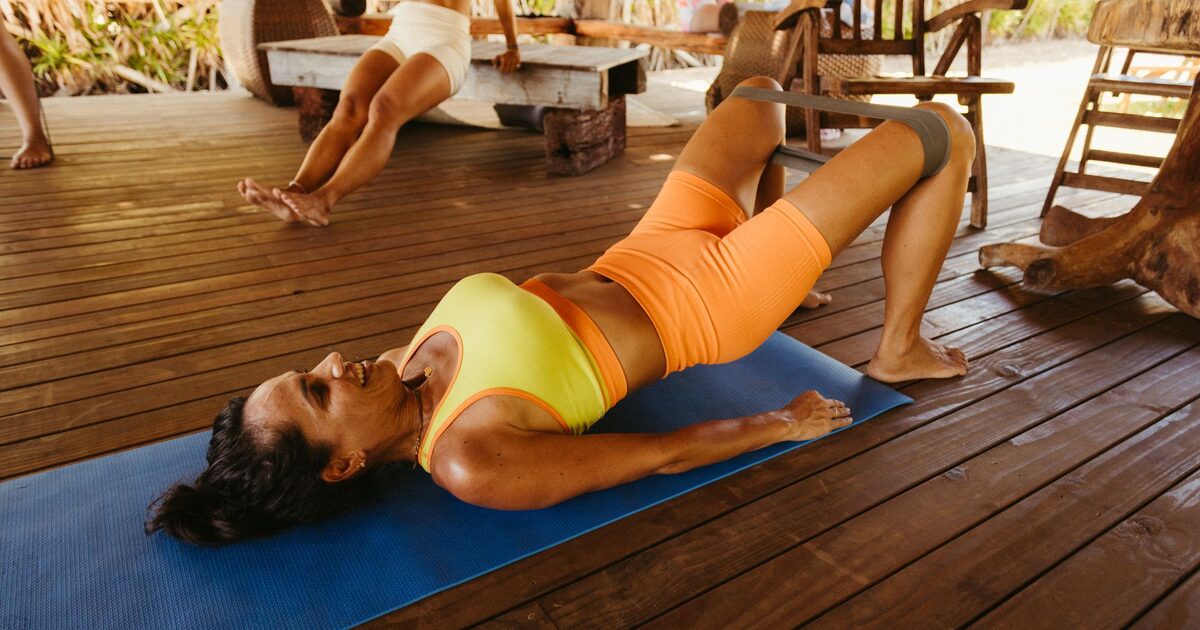
Bigger glutes are not a genetic lottery you either win or lose. They are a training problem, and training problems have solutions. Grow them the same way you grow any muscle: load the tissue near its longest, stretched position, add weight over months, eat enough to build, and recover between sessions. The difference between people who build a noticeable backside and people who spin their wheels for years usually comes down to four or five specific choices. Here is exactly what to do.
Train the glutes through their two real jobs
The gluteus maximus does two main things: it extends the hip (driving your thigh backward, like standing up from a squat) and it produces force when the hip is deeply bent. To grow it, you need both patterns covered. Pick at least one exercise where peak tension lands at full hip extension, and at least one where the glute is loaded deep in hip flexion.
- Peak tension at lockout: hip thrust, glute bridge, cable pull-through, 45-degree back extension done with a posterior pelvic tilt.
- Peak tension in the stretch: deep squats, Bulgarian split squats, walking lunges, deficit reverse lunges, deadlifts.
You do not need ten exercises. You need two or three that you can load heavily and repeat for months while adding weight. Browse the exercise library if you want video form checks on any of these before you load them up.
Make the hip thrust your anchor lift
If one movement earns the most space in your program, it is the barbell hip thrust. The glute reaches its hardest contraction exactly where the hip thrust is hardest: full lockout. That match between the exercise's strength curve and the muscle's leverage is why it builds glutes so reliably.
Dial in the setup. Bench against your shoulder blades, feet planted so your shins finish vertical at the top, chin tucked. Drive through your heels, squeeze hard at lockout for a one-second count, and lower under control. The most common mistake is overarching the lower back to fake a higher rep total. Keep your ribs down and let the glutes, not the spine, do the work. If you feel it mostly in your hamstrings, walk your feet a touch closer; mostly in your quads, walk them out.
Work hip thrusts in the 8-15 rep range for most of your sets. The glutes respond well to moderate reps with real load, and that range lets you add weight steadily without form falling apart.
Get the dose right: volume, intensity, frequency
Muscle grows when you give it a reason to and then let it recover. Three numbers govern that.
- Volume: aim for roughly 10-20 hard sets per week for the glutes once you are past the beginner stage. "Hard" means stopping within 1-3 reps of failure. Ten quality sets beat twenty half-efforts.
- Intensity: most working sets should sit between 65% and 85% of your one-rep max, landing you in the 6-15 rep window. Leave the grinding singles for strength blocks.
- Frequency: hit the glutes 2-3 times per week. Splitting your weekly sets across two or three sessions lets each one be sharper than a single exhausting marathon day.
The non-negotiable layer underneath all of this is progressive overload. Each week or two, add a little: 2.5 kg on the bar, an extra rep on every set, or one more set. Keep a log. If the numbers are not creeping up over a two-month window, the muscle has no reason to grow. For the deeper physiology of why that tension-then-recovery cycle works, see how muscles actually grow.
A sample week you can run today
Here is a two-day glute focus that fits inside most full-body or lower/upper splits. Rest 2-3 minutes between heavy sets, 60-90 seconds on the smaller movements.
| Day | Exercise | Sets x Reps | Cue |
|---|---|---|---|
| Day 1 | Barbell hip thrust | 4 x 8-10 | 1-sec squeeze at top |
| Day 1 | Bulgarian split squat | 3 x 10-12 each leg | Long stride, lean forward slightly |
| Day 1 | 45-degree back extension | 3 x 12-15 | Round up from the glutes, not the spine |
| Day 2 | Romanian deadlift | 4 x 8-10 | Push hips back, feel the stretch |
| Day 2 | Deficit reverse lunge | 3 x 10-12 each leg | Drop into the back hip |
| Day 2 | Cable kickback or glute bridge | 3 x 15-20 | Pause and squeeze each rep |
Notice the balance: one lockout-focused lift and one stretch-focused lift each day, plus a lighter finisher. That covers both of the glute's jobs twice a week.
Feed the growth
You cannot build appreciable muscle in a meaningful calorie deficit. To add glute size, eat in a slight surplus of roughly 200-300 calories above maintenance. That is enough to support growth without piling on excess fat. If you are already lean and patient, a "lean bulk" at the lower end of that range works well.
Protein is the lever that matters most. Target about 1.6-2.2 grams per kilogram of bodyweight per day, spread across three or four meals. For a 70 kg person that is roughly 110-150 grams daily. Carbohydrates fuel the heavy sets that actually drive growth, so do not fear them around training. Need ideas that hit those numbers without much fuss? The recipe collection has high-protein options built for exactly this.
Common mistakes that stall glute growth
- Living in the short range. Endless kickbacks and banded clamshells feel like a burn but rarely add size on their own. They are accessories, not the main course. Load the big patterns.
- Quarter-rep squats. Depth matters. The glute does most of its growing in the bottom of a squat or lunge, so cutting range short cuts your results.
- Chasing soreness. A muscle being sore is not the same as a muscle growing. Consistent progressive overload beats a soreness chase every time.
- Program hopping. Switching routines every two weeks resets your progression. Pick a plan and run it for 8-12 weeks before judging it.
Set a realistic timeline
Visible glute change takes months, not weeks. A beginner training consistently and eating to support it can expect noticeable development in 3-4 months. After the first year, gains slow and every kilogram of progress is earned. That is normal. The people with impressive glutes did not find a trick; they ran the basics for a long time without quitting.
Anchor your week around hip thrusts and a deep stretch-loaded lift, add weight over time, eat slightly above maintenance with enough protein, and sleep. Do that for a season and the mirror will show it. If you want the full framework behind any muscle group, read the complete guide to building muscle.
Key takeaways
- Anchor your week around the barbell hip thrust, where the glute is hardest at full lockout
- Cover both glute jobs: one lockout-focused lift and one deep stretch-loaded lift each session
- Do 10-20 hard sets per week, 2-3 times weekly, and add weight or reps every week or two
- Eat in a slight 200-300 calorie surplus with 1.6-2.2 g of protein per kg of bodyweight
- Expect noticeable change in 3-4 months; consistency beats soreness chasing and program hopping
Frequently asked questions
What is the single best exercise for bigger glutes?
The barbell hip thrust. The glute contracts hardest at full hip extension, which is exactly where the hip thrust is most demanding, so the load lines up with the muscle's strongest position. Make it the anchor of your program and add weight over time.
How long does it take to build noticeable glutes?
A beginner training consistently and eating in a slight surplus can usually see noticeable development in 3-4 months. After your first year, progress slows and each gain is harder won. Months of steady work matter far more than any single routine.
Can I grow my glutes without weights?
To a point. Bodyweight work like deep split squats and single-leg hip thrusts can build a base for true beginners. But because muscle grows from progressive overload, you will plateau quickly without a way to add resistance, so bands, dumbbells, or a barbell become necessary to keep growing.