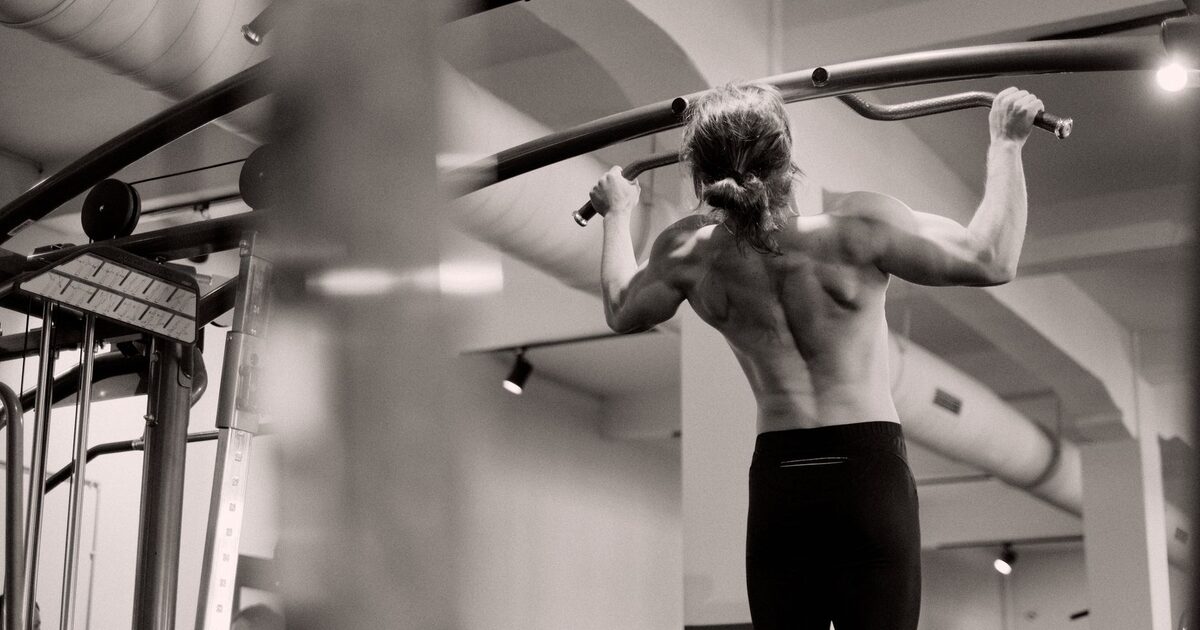
The push/pull/legs split sorts every lift you do into three buckets based on what the muscles are actually doing: pressing things away from you, pulling things toward you, or moving your lower body. It is one of the cleanest ways to organise a training week, which is why everyone from first-year lifters to competitive bodybuilders keeps coming back to it. Here is how it works, who it suits, and how to build a week that fits your schedule.
The logic behind the three days
Muscles that share a movement also share the work. When you bench press, your triceps and front delts help your chest. When you row, your biceps help your back. PPL groups those synergists together so they get trained on the same day and rested together. That means a muscle is rarely hammered two days in a row by accident, which is exactly what happens on a careless body-part split where chest day on Monday and shoulder day on Tuesday both flatten your triceps.
The three days break down like this:
- Push — chest, shoulders, and triceps. Horizontal and vertical pressing.
- Pull — back, rear delts, and biceps. Horizontal and vertical pulling, plus elbow flexion.
- Legs — quads, hamstrings, glutes, and calves. Squatting, hinging, and isolation.
That clean separation is the whole appeal. You walk into the gym knowing precisely which movements belong to the day in front of you.
What a session actually looks like
Numbers make this concrete. Here is a sensible template for each day — roughly 16 to 20 hard sets per session, leaving the last rep or two in the tank on compounds and pushing closer to failure on isolation work. Browse the exercise library if any of these movements are new to you.
Push day
- Barbell bench press — 4 × 5–8. Drive your feet into the floor, keep the bar over your mid-chest.
- Standing overhead press — 3 × 6–10. Squeeze your glutes so you do not lean back.
- Incline dumbbell press — 3 × 8–12.
- Cable lateral raise — 3 × 12–15. Lead with your elbow, not your hand.
- Triceps rope pushdown — 3 × 12–15.
Pull day
- Weighted pull-up or lat pulldown — 4 × 6–10. Pull your elbows down and back, not just the bar.
- Barbell or chest-supported row — 4 × 8–12. Pause for a beat at the top.
- Face pull — 3 × 15–20. The cheapest insurance your shoulders will ever buy.
- Incline dumbbell curl — 3 × 10–12.
- Hammer curl — 3 × 12–15.
Legs day
- Back squat — 4 × 5–8. Break at the hips and knees together, hit at least parallel.
- Romanian deadlift — 3 × 8–12. Push your hips back, feel the stretch in your hamstrings.
- Leg press — 3 × 10–15.
- Seated leg curl — 3 × 12–15.
- Standing calf raise — 4 × 12–20. Pause at the bottom and the top.
Three days or six? Frequency is the real decision
This is where PPL splits into two very different programmes. The same three workouts can be run once a week or twice a week, and the choice changes everything.
The 3-day version trains each muscle once every seven days. You lift Monday, Wednesday, Friday, then rest the weekend. It is low-commitment and recovers easily, but training a muscle once a week is on the lighter side of what the research suggests for fastest growth. It works well for beginners, busy weeks, or anyone returning after a layoff.
The 6-day version runs the rotation twice — Push, Pull, Legs, Push, Pull, Legs, then one rest day. Now every muscle gets trained twice a week, which lines up with the frequency most studies favour for hypertrophy. The catch is obvious: six gym days asks a lot of your calendar and your recovery. Miss two sessions and the whole structure wobbles.
| Day | 3-day PPL | 6-day PPL |
|---|---|---|
| Mon | Push | Push |
| Tue | Rest | Pull |
| Wed | Pull | Legs |
| Thu | Rest | Push |
| Fri | Legs | Pull |
| Sat | Rest | Legs |
| Sun | Rest | Rest |
If six days is unrealistic but once a week feels too thin, a four- or five-day hybrid works too: run the rotation on a rolling basis (PPL, then rest, then PP…) so each muscle lands roughly every fifth day. You lose the tidy fixed weekday schedule but keep frequency higher than the strict 3-day plan.
Who should run PPL — and who should not
PPL rewards people who can train at least four days a week and want clear, focused sessions. If you can only manage three days, you are not getting the frequency advantage, and a different structure usually serves you better. A true beginner training three times a week will often grow faster on a full-body plan, where each muscle gets hit three times instead of once — we cover that trade-off in full body vs split routines.
If four days is your ceiling, the upper/lower split is the more natural fit. It delivers the same twice-a-week frequency in four sessions instead of six, which is why a lot of intermediates land there before graduating to a six-day PPL. The honest summary: PPL is excellent at five to six days a week, fine at four, and a questionable use of three.
Common mistakes that blunt the split
- Letting pull day shrink. Back work is less fun than pressing, so it quietly gets cut. Keep your weekly pulling sets at least equal to your pressing sets, or your posture and shoulders pay for it.
- Burning out on legs day, then skipping it. The most-skipped session of the three. If a full leg day repeatedly defeats you, cut it to four quality movements rather than abandoning it.
- Never adding weight or reps. The split organises your training; it does not progress it. Add a little load or a rep most weeks, or nothing improves.
- Ignoring recovery on six days. Six training days only works if sleep and food keep up. Protein around 1.6 to 2.2 grams per kilo of bodyweight is the floor — our recipes make hitting it less of a chore.
Making it stick
The best version of this split is the one your week can actually absorb. Start at the frequency you can repeat for months, not the one that looks most hardcore on paper. Pick your push, pull, and legs movements, log every session, and chase a small improvement each week. If you want the lifts, sets, and progression handled for you, the FitBot Coach app builds a PPL plan around the days you have and tracks the rest.
Key takeaways
- PPL groups lifts by movement: pressing, pulling, and lower body, so synergist muscles train and rest together.
- Aim for roughly 16-20 hard sets per session, stopping 1-2 reps short of failure on compounds.
- The 3-day version trains each muscle once a week; the 6-day version hits it twice for faster growth.
- PPL shines at 5-6 days a week, works at 4, and wastes its frequency edge at only 3.
- Keep weekly pulling sets equal to pressing, never skip legs, and add load or reps most weeks.
Frequently asked questions
Is PPL good for beginners?
It can work, but a beginner training only three days a week usually grows faster on full-body sessions, which hit each muscle three times instead of once. PPL becomes the better choice once you can commit to four or more training days a week.
How many days a week should I run PPL?
Five or six days is the sweet spot, because it trains every muscle twice a week. Four days still works on a rolling rotation, but at three days you lose the frequency advantage and should consider an upper/lower or full-body plan instead.
What is the difference between push and pull days?
Push day covers everything you press away from your body: chest, shoulders, and triceps. Pull day covers everything you pull toward you: back, rear delts, and biceps. Legs get their own day for quads, hamstrings, glutes, and calves.