Protein is the one macro almost everyone under-eats and over-complicates. You don't need exotic powders or a meal-prep empire — you need to know which foods carry the most protein per realistic serving, and then build your plate around them. This list ranks 25 of the best, grouped by where they shine, with the actual grams you'll get and a quick cue for using each one. Most active people do well on 1.6–2.2 g of protein per kilogram of bodyweight per day; the foods below make hitting that number boring and easy.
How to read this list
Two things matter with protein, and most articles only mention one.
The first is quantity per serving you'd actually eat — not per 100 g, not per dry weight. A food that's "30% protein" sounds great until the portion is 20 g, so every number below is for a normal plated serving.
The second is quality: whether a food supplies all nine essential amino acids and how much leucine it carries — the amino acid that switches on muscle building. Animal foods are complete and leucine-rich. Most single plant foods are short on one or two amino acids, which is why plant eaters combine sources and aim a little higher on total grams. A real difference, not a dealbreaker.
The 25 are grouped into four tiers so you can shop by need: lean animal heavyweights, dairy and eggs, the best plant options, and a few convenience picks. The recipe library has meals built around most of these.
Tier 1: lean animal heavyweights
Calorie for calorie, these are the most efficient protein you can buy. If you eat meat and fish, most of your daily total should come from here.
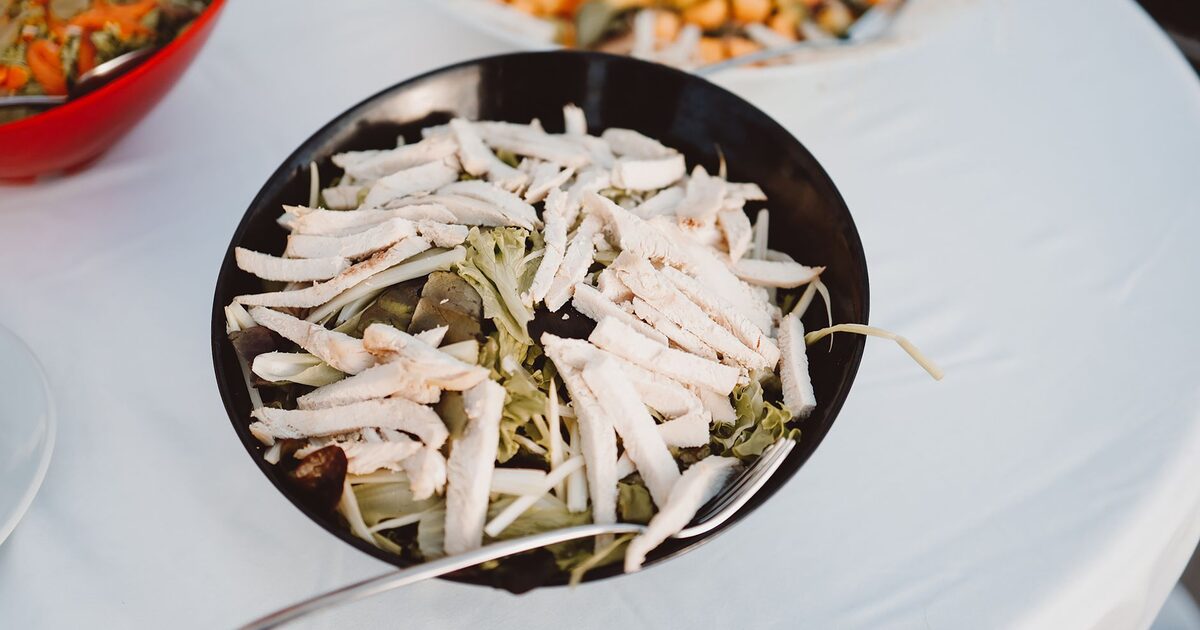
- Chicken breast — ~31 g per 100 g cooked. The default for a reason: low fat, cheap, neutral. A palm-sized 150 g portion gives ~46 g. Brine it 30 minutes in salted water if yours turns out dry.
- Turkey breast — ~29 g per 100 g cooked. Slightly leaner than chicken with the same versatility; minced, it's ~25 g per quarter-pound burger before the bun.
- Lean beef (sirloin/round) — ~26 g per 100 g cooked. Brings iron, zinc, and B12 poultry doesn't. A 150 g steak is ~39 g — pick cuts with "loin" or "round" to keep fat moderate.
- Pork tenderloin — ~26 g per 100 g cooked. The most underrated cut in the case: as lean as chicken breast, more flavour. Pull it at 63°C and rest, don't overcook.
- Tuna (canned in water) — ~25 g per 100 g. A 145 g can drained is ~30 g for around 130 calories. Keep two tins in your bag for the days that get away from you.
- Salmon — ~25 g per 100 g cooked. Fattier and higher-calorie, but those calories carry the omega-3s most people lack. A 150 g fillet is ~37 g — protein and a genuinely good fat source in one.
- Shrimp/prawns — ~24 g per 100 g cooked. Almost no fat, cooks in three minutes, ~29 g per 120 g handful. Buy them frozen and raw; they thaw under cold water in ten minutes.
- White fish (cod, haddock, tilapia) — ~23 g per 100 g cooked. The leanest pick here — a 150 g fillet is ~34 g for barely 130 calories, and mild enough that fussy eaters won't argue.
Tier 2: dairy and eggs
The convenience champions. These need little or no cooking, which is exactly why they're the protein people actually eat day after day.
- Greek yoghurt (0% fat) — ~10 g per 100 g. A 170 g pot is ~17 g, roughly double regular yoghurt. Check the label says "Greek" or "strained," not "Greek-style."
- Cottage cheese — ~11 g per 100 g. A 200 g tub is ~22 g of slow-digesting casein, a smart pre-bed option. Blend it smooth if the texture isn't for you.
- Skyr / quark — ~11 g per 100 g. Icelandic skyr and German quark are the thickest, highest-protein cultured dairy you can buy — ~17 g per 150 g with almost no fat.
- Whole eggs — ~6 g each. Three eggs is ~18 g of about as complete a protein as exists. Eat the yolk: it holds half the protein and most of the micronutrients.
- Egg whites — ~3.6 g each. Protein with near-zero fat and calories — liquid whites stretch an omelette without padding it. One whole egg plus two whites is the best of both.
- Milk — ~8 g per 250 ml glass. A blend of fast whey and slow casein, plus calcium. Splash it into oats and coffee and the grams add up unnoticed.
- Parmesan — ~10 g per 30 g. A small portion, but as a hard cheese it's unusually protein-dense — a grating over pasta or eggs is a real top-up, not just flavour.
Tier 3: the best plant-based proteins
Plant proteins bring fibre and almost no saturated fat, and a few genuinely compete with meat. Combine a couple across the day — beans plus grains — and you cover the full amino-acid spread. (For the carbs riding along with these, here's how to tell good from bad.)
- Tofu (firm) — ~17 g per 100 g. A complete protein and one of the highest-protein plant foods by serving. Press it 20 minutes, then roast or pan-fry hot so it crisps instead of stewing.
- Tempeh — ~19 g per 100 g. Fermented, firmer, and nuttier than tofu, with more protein and fibre. Steam it ten minutes before frying to take the edge off any bitterness.
- Edamame — ~11 g per 100 g. Whole young soybeans, complete in amino acids, ~17 g per 150 g bowl. Buy frozen and shelled — three minutes in boiling water and they're a snack or salad topper.
- Lentils — ~9 g per 100 g cooked. A cooked cup (~200 g) is ~18 g, plus a big hit of fibre and iron. Red lentils collapse into soups in 15 minutes, no soaking.
- Chickpeas — ~9 g per 100 g cooked. A 240 g tin drained is ~21 g. Roast them crunchy, blend them into hummus, or throw them cold into a salad.
- Black beans / kidney beans — ~8 g per 100 g cooked. A tin is ~20 g and pairs with rice to form a complete protein — the cheapest protein per gram in this whole list.
- Seitan — ~25 g per 100 g. Wheat gluten, the highest-protein plant food here and the chewiest meat stand-in. It's low in lysine, so pair it with beans across the day.
- Pumpkin seeds — ~9 g per 30 g. The most protein-dense seed you can sprinkle; a small handful adds real grams plus magnesium and zinc to yoghurt or salads.
Tier 4: convenience and supplements
Not magic, just useful. When real food isn't practical, these close the gap fast.
- Whey protein powder — ~24 g per scoop. The fastest, cheapest 24 g you'll find, and the highest in leucine. One scoop in water post-workout or blended into oats is the simplest win in this list. (A scoop is a supplement, not a meal — build most of your intake from whole foods.)
- Edamame/soy or pea protein powder — ~21 g per scoop. The plant alternative that comes closest to whey on amino acids. Worth it if dairy doesn't sit well with you.
The full list at a glance
Here are all 25, sorted by protein per typical serving so you can plan a day at a glance.
| Food | Typical serving | Protein |
|---|---|---|
| Chicken breast | 150 g cooked | ~46 g |
| Turkey breast | 150 g cooked | ~44 g |
| Lean beef | 150 g cooked | ~39 g |
| Pork tenderloin | 150 g cooked | ~39 g |
| Salmon | 150 g fillet | ~37 g |
| White fish (cod) | 150 g fillet | ~34 g |
| Tuna (canned) | 145 g can | ~30 g |
| Shrimp | 120 g cooked | ~29 g |
| Whey protein | 1 scoop | ~24 g |
| Cottage cheese | 200 g tub | ~22 g |
| Pea/soy protein | 1 scoop | ~21 g |
| Chickpeas | 240 g tin | ~21 g |
| Black/kidney beans | 240 g tin | ~20 g |
| Lentils | 200 g cooked | ~18 g |
| Whole eggs | 3 eggs | ~18 g |
| Tofu (firm) | 100 g | ~17 g |
| Edamame | 150 g | ~17 g |
| Greek yoghurt | 170 g pot | ~17 g |
| Skyr / quark | 150 g | ~17 g |
| Tempeh | 90 g | ~17 g |
| Seitan | 70 g | ~17 g |
| Milk | 250 ml glass | ~8 g |
| Parmesan | 30 g | ~10 g |
| Pumpkin seeds | 30 g | ~9 g |
| Egg whites | 2 whites | ~7 g |
How to actually hit your target
Knowing the foods is step one; the habit is step two. Three things make the daily number happen without tracking every gram.
- Anchor every meal with a Tier 1 or 2 protein first. Decide the protein, then build carbs and veg around it. Most people do the reverse and run out of room.
- Split it across the day. Roughly 0.4 g/kg per meal across 3–4 meals — about 30–40 g a sitting for most adults — beats one giant protein dinner. Your body uses each dose more fully when it's spread out.
- Pre-solve the lazy meal. Keep tinned tuna, a tub of cottage cheese, and a bag of whey in rotation so a 30 g hit is never more than two minutes away.
Protein supports the muscle you build in the gym, but it can't replace the training stimulus — you need both. Pick your lifts from the exercise library, then weigh your portions for a week. Once you've seen what 40 g of chicken or a 240 g tin of chickpeas actually looks like on the plate, you stop needing to measure and start hitting the number by eye.
Key takeaways
- Aim for 1.6-2.2 g of protein per kg of bodyweight a day, split across 3-4 meals of roughly 30-40 g each.
- Lean animal foods like chicken breast (~46 g per 150 g) and white fish are the most protein per calorie.
- Quality matters too: animal foods are complete and leucine-rich, so plant eaters should combine sources and aim a little higher on total grams.
- Dairy wins on convenience — a 200 g tub of cottage cheese is ~22 g, a 170 g Greek yoghurt pot ~17 g, with no cooking.
- Top plant picks by serving are seitan, tempeh, tofu, edamame, and beans; pair beans with grains to cover all amino acids.
Frequently asked questions
How much protein do I need each day?
Most active adults do well on 1.6-2.2 g of protein per kilogram of bodyweight per day. For an 80 kg person that's about 130-175 g. Spreading it across 3-4 meals of roughly 30-40 g each helps your body use it more fully than one large serving.
Are plant proteins as good as animal proteins?
They can be, with a little planning. Most single plant foods are lower in one or two essential amino acids and carry less leucine, so plant eaters should combine sources across the day — beans with grains, for example — and aim slightly higher on total grams. Soy foods like tofu, tempeh, and edamame are complete on their own.
Do I need protein powder to hit my target?
No. Protein powder is just a fast, cheap convenience — a scoop of whey is about 24 g in two minutes. You can hit any target from whole foods alone, but a shake is a handy backup on busy days or right after training. Treat it as a supplement to meals, not a replacement for them.