Most home gym shopping lists are just a pile of product names. The hard part is not knowing that you want dumbbells and a bench; it is knowing how to tell a bench that holds 120 kg over your face from one that wobbles, and whether the gear will even fit through your door. This checklist is built the way I'd kit out a client's spare room: measure first, buy the small core of things that earn their footprint, and learn the one spec that separates a good buy from a regret on each item.
Measure the room before you spend a penny
Three measurements decide what you can own, and people skip all of them. Take a tape measure to the space now; returning a barbell is a miserable afternoon.
- Ceiling height. Stand tall, press both arms straight overhead, and measure from the floor to your knuckles, then add the bar. Roughly 2.5 m of clearance covers a standing overhead press for most people. A low basement quietly rules out barbell pressing and pushes you toward seated or dumbbell work.
- Floor area per zone. A dumbbell-and-bench corner needs about 2 to 3 m². Add a barbell and rack and you want 4 to 6 m² so you can stand back from the bar and not crack a wall on a loaded squat.
- The path in. A 7-foot Olympic bar is 2.2 m long and won't bend around a tight stairwell. Measure door widths and stair turns before you order anything long or heavy.
Note your subfloor too. Concrete takes anything; a suspended timber floor upstairs flexes and booms under dropped weight, steering you toward dumbbells and mats rather than heavy deadlifts off the boards.
The non-negotiable core
Five tools cover the five movement patterns you need to train a whole body: squat, hinge, push, pull, and carry or brace. If you own only this list, you own a real gym. For each one, here is what to buy and the single thing to check before you pay.
Adjustable dumbbells
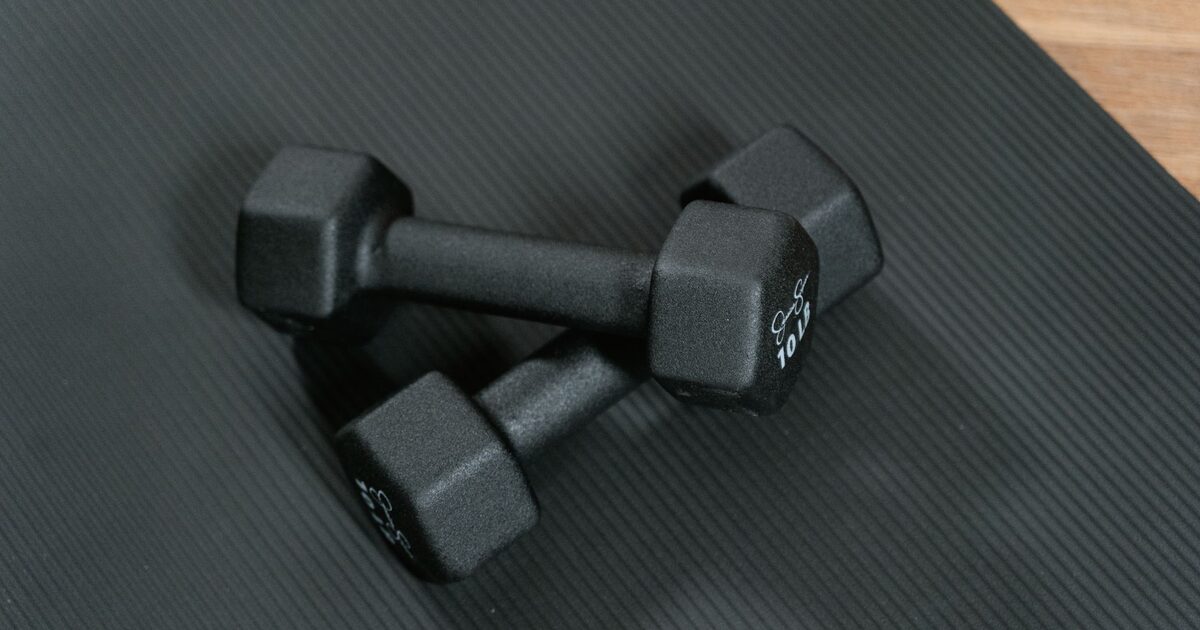
The one purchase that does the most. A single selector-style pair dials from roughly 2.5 kg to 24 kg per hand (about 5 to 52.5 lb), replacing a whole rack of fixed weights in the footprint of a shoebox. They cover presses, rows, lunges, Romanian deadlifts, curls, and shoulder work.
Check before buying: the dial mechanism's wobble. Cheap selector dumbbells rattle and drop plates mid-set, so lift the display model and shake it, and prefer a tight, positive lock. On a budget, spinlock handles with loose plates go heavier for less and cost you only about 20 seconds of plate-swapping per set.
An adjustable bench
The bench is where you press, row, and step, and it is the one item where a cheap buy is a genuine safety issue. Look for a flat-incline-decline (FID) bench so you can hit chest, shoulders, and incline work from one pad.
Check before buying: the load rating and the gap. Buy one rated to at least 250 kg total, and scan reviews for the word "wobble" first. The pad should lock firmly at flat, incline, and upright with no rock, and the seat-to-back gap should be small enough that you don't sink into it. A back pad around 30 cm wide supports your shoulders without flaring your elbows off the edges.
A pull-up bar
Pulling is the pattern home setups skip most, and skipping it is why so many home trainees end up round-shouldered. A bar fixes vertical pulling cheaply.
Check before buying: how it mounts. A doorway leverage bar (the kind that hooks over the frame, no drilling) holds around 100 kg and is fine for most, but it needs deep enough trim to seat against. A wall-mounted bar is far sturdier, but the bolts must go into a stud or solid masonry, never just plasterboard. If you can flex the doorway trim with your thumb, go wall-mounted.
A resistance band set
Bands are the cheapest way to fill the gaps dumbbells leave: face pulls for the rear delts, pull-aparts, assisted pull-ups, and lateral walks for the hips. A graded set also turns any doorway into a cable station. The exercises are the same ones you'd do on a machine, so check the exercise library for a demo of any pattern that is new to you.
Check before buying: buy a set with graded resistances (light through heavy) and a door anchor, not a single tube. Progressive overload with bands means clipping on a thicker band, which you can't do with one. For a session that uses nothing but a band set, the no-equipment full-body workout shows how to train the pull at home before you buy anything.
Flooring you won't regret
This is the item people forget until they crack a tile. Dropping weight on bare floor damages it and gives you no stable base. For a dumbbell zone, interlocking foam-rubber tiles 12 to 20 mm thick are cheap and quiet. For an area where you'll set down a loaded bar, rubber horse-stall mats (about 1.2 m by 1.8 m and 19 mm thick) are far tougher per square metre.
Check before buying: thickness for the job. Thin tiles are fine under dumbbells but won't protect a slab or a downstairs ceiling from a dropped barbell. Match the mat to the heaviest thing that will land on it.
Worth adding next
Once the core is in, these earn their space in roughly this order. None is essential, so add them only as you outgrow what you have.
- A kettlebell. One bell adds swings, goblet squats, and loaded carries with a different feel from dumbbells. Start around 16 kg for men or 8 to 12 kg for women on the swing; it is a hinge, so most people can handle more than they expect.
- A barbell, plates, and a rack. The heavy-lifting upgrade for when dumbbells stop challenging your squat and deadlift. A men's bar is 20 kg and 2.2 m (28 to 29 mm shaft); a women's bar is 15 kg and 25 mm. Bushing sleeves are cheaper; bearing sleeves spin freely for Olympic lifts. Pair it with cast-iron plates if you won't drop them or rubber bumpers if you will, plus a rack with proper safety arms so you can bail a failed rep without a spotter. Look for 11-gauge steel rather than thinner 14-gauge.
- A wall mirror. Not vanity. With no coach watching, a mirror is how you catch a caving knee or an uneven press in real time.
- A fan and a clock. A cheap fan makes a closed room trainable in summer, and a wall clock with a second hand beats fishing for your phone between sets.
The checklist at a glance
| Item | Spec to look for | Check before buying | Priority |
|---|---|---|---|
| Adjustable dumbbells | 2.5–24 kg per hand, tight lock | Wobble in the dial mechanism | Essential |
| Adjustable bench | FID, rated 250 kg+, ~30 cm pad | Rock or wobble under load | Essential |
| Pull-up bar | Doorway ~100 kg, or wall into a stud | How it mounts; trim or stud strength | Essential |
| Resistance band set | Graded light–heavy, door anchor | A set, not a single tube | Essential |
| Flooring | 12–20 mm tiles, or 19 mm stall mats | Thickness vs the heaviest drop | Essential |
| Kettlebell | 16 kg men / 8–12 kg women to start | Smooth handle, flat base | Next |
| Barbell + plates + rack | 20 kg bar, 11-gauge rack, safety arms | Ceiling height; rack safety pins | Later |
How much to buy on day one
Resist the urge to fill the room. A complete starter setup is one pair of adjustable dumbbells, an FID bench, a pull-up bar, a band set, and a few rubber tiles. That trains every movement pattern, fits in 2 to 3 m², and costs a fraction of a barbell rig. Add the heavy gear later, once you've proven the habit and outgrown the load. For the full reasoning on what to spend where, our guide to building a home gym on a budget sorts the same gear by price.
Putting it together
Measure your ceiling, floor, and doorway first. Buy the five-item core, judging each on the one spec that matters rather than the brand on the box. Set the room up so you can actually use it: stable floor, a fan, a mirror to self-check. The only thing left is training and eating to match, since none of this kit shows without enough protein behind it, so keep a few simple high-protein recipes on hand. And if you'd like your sessions, sets, and rest timers handled around whatever gear you own, that is what the FitBot Coach app is built to do.
Key takeaways
- Measure ceiling height (about 2.5 m for overhead presses), floor area and your doorway before buying anything
- Five items cover a full gym: adjustable dumbbells, an FID bench, a pull-up bar, a band set and flooring
- Judge a bench on its load rating (250 kg+) and wobble, not its price or brand
- Buy adjustable dumbbells reaching 24 kg per hand; check the dial lock doesn't rattle
- Add a kettlebell, then a barbell and rack, only once you outgrow the core kit
Frequently asked questions
What is the bare minimum equipment for a home gym?
One pair of adjustable dumbbells, an adjustable bench, a pull-up bar, a resistance band set and some rubber flooring. That covers all five movement patterns and fits in 2 to 3 square metres. You can train your whole body with this and add heavier gear later.
Are adjustable dumbbells worth it?
For a home gym, yes. One selector pair replaces a whole rack of fixed weights in the footprint of a shoebox, dialling from about 2.5 to 24 kg per hand. The main thing to check is a tight locking mechanism, since cheap models rattle and can drop plates mid-set.
Do I need a barbell and rack at home?
Not at first. Adjustable dumbbells handle most training and take far less space, so most people are well served without a barbell. Add one only when dumbbells stop challenging your squat and deadlift, and pair it with a rack that has proper safety arms.