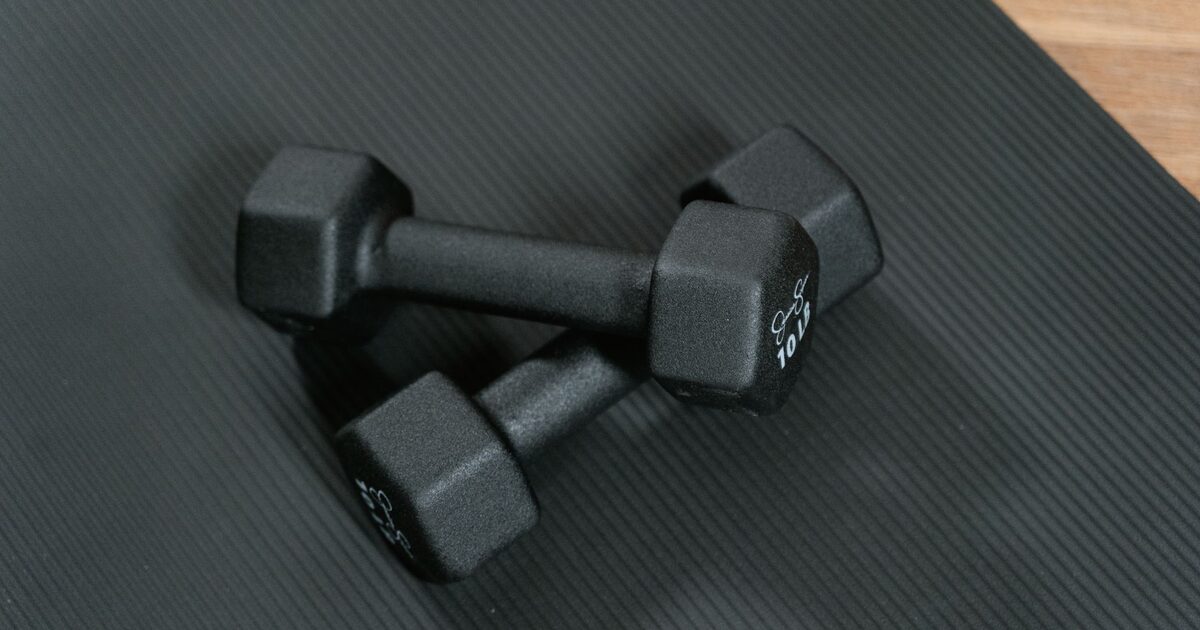
A home gym does not start with a squat rack. It starts with a clear-eyed look at what you actually do each week and how much floor you can spare. Most people overspend on the wrong gear in month one, then let a heavy machine collect laundry by month three. This guide builds in the opposite direction: tier by tier, cheapest first, where every purchase opens up movements you couldn't train before, and you can stop at any tier with a setup that already does the job.
First, decide what your gym needs to do
Equipment is just a way to load the five basic movement patterns: squat, hinge, push, pull, and carry. A complete home gym lets you load all five and add weight over time. Everything below buys the cheapest tool that opens up each pattern, then makes it heavier.
Two numbers set your ceiling before you spend anything: your free floor space in square metres, and your headroom. A barbell overhead press needs roughly 2.5 m for most people, so a low basement quietly rules out the rack tier and pushes you toward dumbbells.
Tier 1: Bands and bodyweight (roughly the price of two months at a commercial gym)
This is the cheapest honest gym you can own, and it trains all five patterns from day one. A door-anchor resistance band set and a pull-up bar cover pushing, pulling, and hinging; your own bodyweight covers squatting and carries. Bands are a commodity, so buy on price, but get a set with graded resistances (light through heavy) rather than one tube, because progressive overload here means clipping on a thicker band.
- Loop band set with handles and a door anchor — expect roughly the cost of three protein tubs. Covers chest press, rows, overhead press, and banded squats.
- Doorway or wall-mounted pull-up bar — the wall-mounted kind is far sturdier; check the bolts go into a stud, not just plaster.
- An exercise mat for floor work, planks, and hip thrusts off the ground.
The honest limit of Tier 1: bands give the most resistance where you're already strongest (the top of a press) and the least at the bottom, the opposite of how a dumbbell loads you. They're brilliant for the habit and surprisingly hard for upper-body work. If this is your whole setup, run a structured plan; a full-body resistance band workout hits every pattern with nothing but a band set.
Tier 2: Adjustable dumbbells and a bench (the core of any home gym)
If you buy one thing on this whole page, make it a pair of adjustable dumbbells. A single set replaces an entire rack of fixed weights, dialling from about 2 kg to 24 kg per hand (selector-style) or higher with spinlock plates. Pair them with an adjustable bench and you've built a gym that handles the vast majority of what a commercial floor offers: presses, rows, lunges, Romanian deadlifts, curls, and shoulder work.
This tier is where you stop scaling resistance by guesswork and start adding real, countable load. Pick a weight you can lift for 8 to 12 reps with two or three reps left in the tank, do 3 to 4 sets, and add 1 to 2 kg once a set starts to feel easy. For a ready-made session that uses exactly this kit, follow a dumbbell-only full-body workout.
Where to spend and where not to:
- Never skimp on the bench. A wobbly bench is a genuine safety issue when you've got 20 kg over your face. Buy one rated to at least 250 kg total, with a wide, stable base and a back pad that locks firmly at flat, incline, and upright.
- You can skimp on the dumbbells' brand. Selectorised dumbbells (the dial kind) are compact; spinlock handles with loose plates are a third of the price and just as effective, costing you only 20 seconds of plate-swapping per set.
- Buy used here first. Dumbbells and plates are nearly indestructible. Iron doesn't wear out, so secondhand cast-iron from Facebook Marketplace or a local listing is the single biggest money-saver in this guide, often half the retail price.
Tier 3: A barbell, plates, and a rack (the heavy-lifting upgrade)
Dumbbells top out. When 24 kg per hand stops challenging your squat and deadlift, a barbell is the only practical way to keep loading the lower body, with both hands sharing one bar. This tier is the most expensive and the most space-hungry, so it's genuinely optional; plenty of people never go past Tier 2.
The safety logic flips here. With heavy barbell work, a squat rack with adjustable safety arms is what lets you bail out of a failed squat or bench without a spotter. This is the one place not to buy the cheapest no-name option:
- Barbell: a 20 kg, 7-foot bar rated to at least 300 kg. A decent knurl and a true centre matter more than the brand stamp.
- Plates: a commodity, buy on price per kilo. Start with enough to load roughly your bodyweight on the bar and add as you progress. Cast-iron is cheapest; rubber bumpers cost more but protect your floor on deadlifts.
- Rack: a squat stand or half-rack with sturdy safety arms or pins. Bolt it down or buy a heavy flat-foot model. A flimsy rack is the one purchase that can actually hurt you, so this is a spend-up, not a save-up.
Don't forget the floor
The most overlooked cost sits under everything else: dropping weights on tile cracks it, and carpet gives you no stable base. Rubber gym tiles (the interlocking jigsaw kind) are cheap, light, and fine for dumbbell work. For a barbell area where you'll drop loaded plates, horse-stall mats from a farm-supply store are the budget legend: roughly 1.2 m by 1.8 m, 18 to 20 mm thick, far cheaper per square metre than anything sold as "gym flooring," and effectively bombproof.
A spend-it-in-order buying table
| Tier | What you buy | What it adds | Footprint |
|---|---|---|---|
| 1 — Entry | Band set, pull-up bar, mat | All five patterns, light load; the habit | A doormat |
| 2 — Core | Adjustable dumbbells + bench | Real, countable load on presses, rows, lunges, RDLs | 2-3 m² |
| 3 — Heavy | Barbell, plates, rack, flooring | Heavy squat, deadlift, bench; long-term strength | 4-6 m² |
Three ways people waste money
- Buying a multi-gym machine first. The all-in-one cable stations sold for home use eat a huge footprint, lock you into fixed paths, and cost more than a dumbbell-and-bench setup that trains you better.
- Chasing fixed dumbbells. A full fixed rack from 5 to 30 kg costs several times what one adjustable pair does and eats a wall.
- Spending on gadgets before basics. Vibrating plates, ab rollers, and novelty gear gather dust. Put that money toward heavier plates or a better bench.
Putting it together
Start at the tier your budget and ceiling allow, and don't buy the next tier until you've outgrown the current one. Most people are well served stopping at Tier 2: adjustable dumbbells and a solid bench, lifted on a few rubber tiles, will build muscle for years if you keep adding weight. The exercises are the same ones you'd do in any gym, so use the exercise library to check form before you load a lift heavy at home with no one watching.
Two things make a home setup stick. Eat to match the training, since none of this shows without enough protein and a sensible calorie target behind it, so keep some simple high-protein recipes on hand. And follow a real plan rather than wandering between pieces of kit, the easy trap when no class or coach sets the pace. If you'd like the sets, progression, and rest timers handled around whatever gear you own, that's what the app is built to do.
Key takeaways
- Buy in tiers: bands and bodyweight, then adjustable dumbbells and a bench, then a barbell and rack.
- One pair of adjustable dumbbells (about 2-24 kg) replaces an entire rack of fixed weights.
- Skimp on plate and band brand; never skimp on the bench or rack, both are safety calls.
- Buy dumbbells and plates used: iron is near-indestructible and often half the retail price.
- Horse-stall mats are the budget flooring fix for any area where you drop loaded plates.
Frequently asked questions
How much does it cost to build a basic home gym?
You can start for roughly two months of a commercial gym membership with a band set, a pull-up bar, and a mat. A core setup of adjustable dumbbells and a solid bench costs more but handles most training for years. Buying plates and dumbbells used is the biggest single saving.
What is the single most useful piece of home gym equipment?
A pair of adjustable dumbbells. One set dials across a wide range of weights and replaces an entire rack of fixed dumbbells in the footprint of a doormat. Paired with an adjustable bench, it covers presses, rows, lunges, Romanian deadlifts, and more.
Do I need a barbell and squat rack at home?
Not for most people. Adjustable dumbbells and a bench train every movement pattern and build muscle for years. A barbell and rack only become worthwhile once dumbbells stop challenging your squat and deadlift, and the rack's safety arms are essential if you lift heavy alone.